Buyers shopping Boca Chase hear the same pitch from every direction: more house for less money than almost anywhere else in West Boca Raton. Lower HOA dues than the newer gated communities a few miles up the road. No mandatory club membership. A resale market that has held up while price per square foot climbs everywhere else in the city. All of that is true. None of it is the number that actually decides whether you can close.
The number that decides it shows up after the offer is accepted, during the inspection period, when your insurance agent calls with a question nobody warned you about: what kind of pipe is behind the walls.
The years that built Boca Chase also built a plumbing problem
Boca Chase's roughly 1,400 homes, villas, and townhomes across fifteen subdivisions were built by Lennar Corporation starting in the early 1980s and continuing through the late 1990s. That construction window is well documented and consistent across every source that covers the community.
It also happens to be, almost exactly, the manufacturing run for polybutylene water piping. Polybutylene was installed as a cheaper substitute for copper in Sun Belt residential construction from 1978 until 1995, and Florida absorbed a disproportionate share of that inventory because of how much building happened here during that stretch. The overlap between when Boca Chase went up and when PB pipe was standard isn't a quirk specific to this neighborhood. It's what happens when a large community gets built across two decades that turned out to be the wrong two decades for plumbing materials.
The practical result: subdivisions from the earlier phases of Boca Chase's construction, the parts built through the mid-1980s, carry more exposure to this material than the sections finished toward the back half of the 1990s, after builders had largely moved away from it. Neither the price sheet nor the listing photos will tell you which is which. Only the pipe does.
Why this surfaces at the four-point inspection, not the home inspection
A four-point inspection is different from a standard home inspection. It looks at exactly four systems, roof, electrical, plumbing, and HVAC, and it exists for one purpose: to give an insurance underwriter a documented basis for accepting or declining your policy. It typically runs $75 to $300 and takes under an hour.
Every home in Boca Chase, regardless of subdivision, is at least 27 years old this year, and the earliest sections are well over 40. Citizens Property Insurance Corporation requires a four-point on any home over 20 years old, and that threshold hasn't moved. Private carriers are less consistent right now. Some have pulled their trigger age down to 15 years as reinsurance costs stayed elevated. Others have pushed it back out to 25 or 30 years as the broader Florida market has started to loosen in 2026. What that means in practice is that every home in this community clears the inspection trigger under Citizens' rules, and most clear it under even the more lenient private thresholds now in circulation.
The plumbing line on that report is where Boca Chase buyers hit the wall other 1980s Florida neighborhoods hit first. Citizens has stated plainly that it will not write coverage on a property with polybutylene plumbing, regardless of the pipe's visible condition. Private carriers vary. Some will write a policy with a specific exclusion for water damage originating from PB pipe failure. Others require proof of a completed repipe before they'll quote at all. None of this shows up on the MLS listing. It shows up on a document your lender and your insurance agent will both ask to see before they'll finalize anything.
What roof age adds on top of that
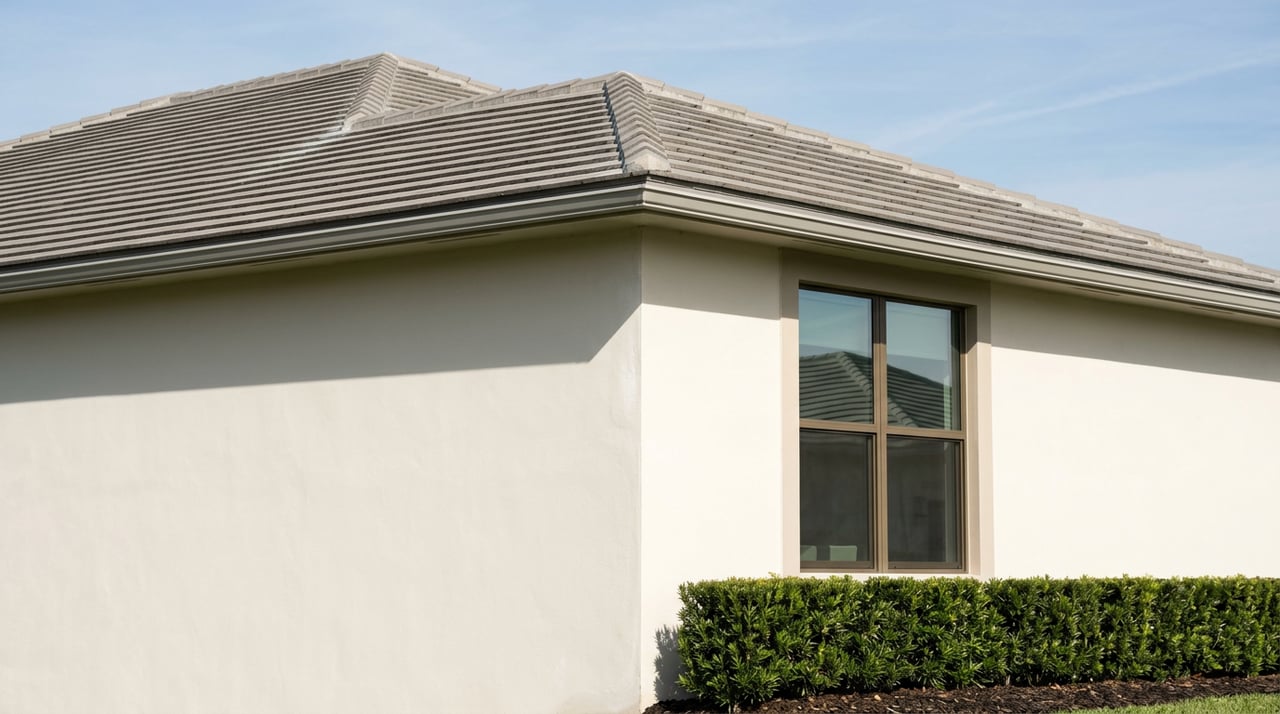
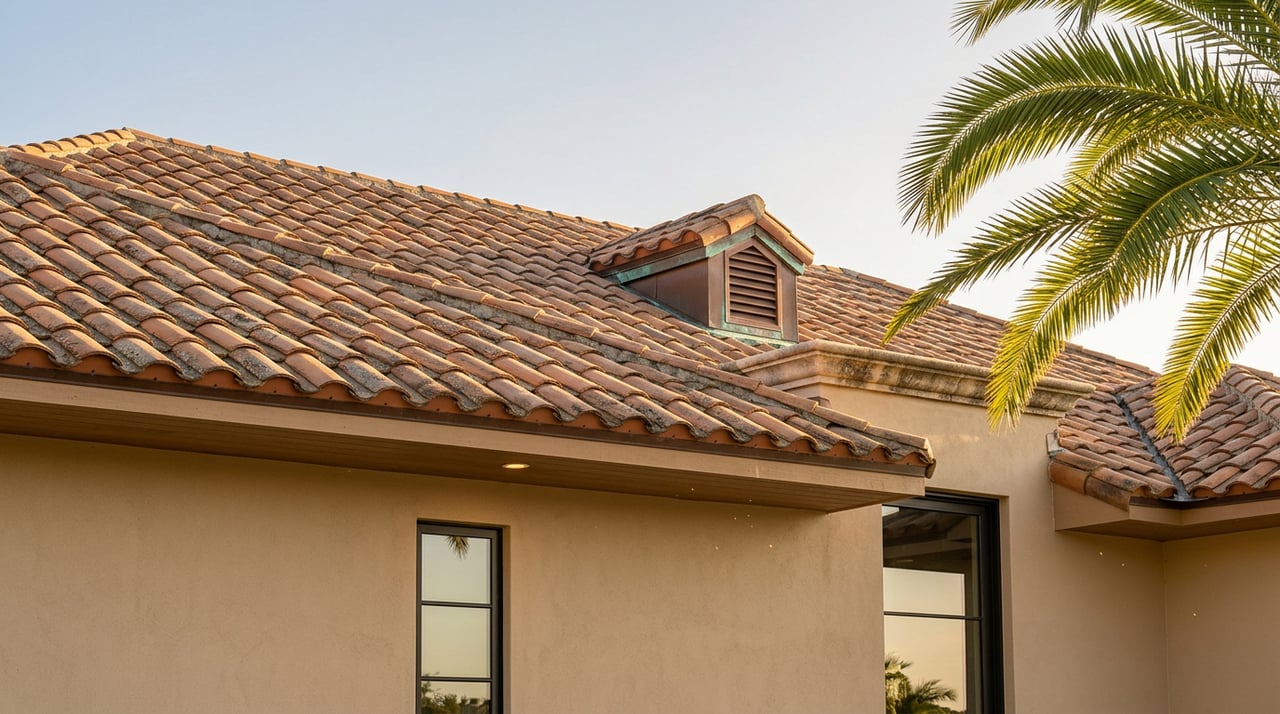
Plumbing is the sharper edge, but roof age compounds it, and Boca Chase's build years put every roof in the community somewhere past the point where insurers stop taking age at face value.
Florida law, under a 2022 reform that's still in effect, prevents insurers from refusing to renew or issue a policy solely because a roof is under 15 years old. Past that mark, the law lets carriers require a homeowner-funded inspection, and if that inspection shows at least five years of remaining useful life, the insurer still can't decline based on age alone. In practice, that inspection requirement is where the friction lives.
| Roof Material | Typical Insurable Life in South Florida | What It Means for a Boca Chase Buyer |
|---|---|---|
| Asphalt shingle | 15 to 20 years | Most Boca Chase homes with an original or first-replacement shingle roof are already past this window and will need a passing roof certification before a carrier will quote |
| Tile (clay or concrete) | 25 to 40 years | Buys more time, but homes from the earliest 1980s phases can still be approaching the ceiling |
| Metal | 30 to 40+ years | The most forgiving option if a prior owner already replaced the roof with metal |
| Flat roof | Often capped under 10 to 15 years | The hardest material to insure at any age, and worth a direct question to the seller before you write an offer |
A shingle roof that looks fine from the driveway can still fail this test. As of July 1, 2026, a new state law expanded who is authorized to perform the roof certification that satisfies this requirement, adding licensed home inspectors, building code inspectors, and general contractors to the list alongside engineers and architects. That's a genuine improvement for timeline pressure. It doesn't change the underlying math on an older roof, it just gives you more people who can legally tell you the number.
What it actually costs to carry one of these homes right now
Palm Beach County's average homeowners insurance premium ran $6,412 in January 2026 and had eased slightly to $6,323 by July, according to state reporting on the first half of the year. That's the county average across all housing stock and all ages. A Boca Chase home that clears its four-point inspection with a newer roof and non-PB plumbing will likely land close to or below that number. A home that doesn't clear cleanly, one with an aging shingle roof and unconfirmed pipe material, is the kind of policy that ends up quoted through Citizens or through a private carrier's more restrictive tier, both of which run higher than the county blended average.
That's the actual trade a Boca Chase buyer is making. A newer community a few miles away built to current wind code will generally insure more predictably and at a lower rate, but it comes with a higher purchase price and often a higher HOA structure. Boca Chase's lower entry price has to be weighed against a carrying cost that isn't fixed until you know what's behind the walls and on the roof.
What to actually request before you write an offer
- Ask the seller for their most recent four-point inspection or wind mitigation report. Many sellers won't have one on hand, but if they do, it saves you a step and gives you a real number before you're under contract.
- Confirm the plumbing material directly, not through assumption. Polybutylene pipe is typically gray, blue, or black and often stamped with the code PB2110 where it's visible near the water heater or under sinks.
- Get the actual roof installation date from permit records, not from a listing description that says "roof replaced" without a year attached.
- Get an insurance quote during your inspection period, not after your appraisal comes back. If a carrier is going to decline or require a repipe, you want that answer while you still have contingencies in place.
None of this is a reason to avoid Boca Chase. It's a reason to sequence your due diligence correctly, in a neighborhood where the price tag and the insurance bill were shaped by two different decades of decisions.
Frequently Asked Questions
Does this apply to villas and townhomes the same way it applies to single-family homes? Yes. The plumbing material and roof age are functions of when a section of the community was built, not what type of home sits on the lot. A villa built in 1984 carries the same PB pipe exposure as a single-family home built the same year.
If a four-point inspection flags polybutylene pipe, is the sale dead? Not necessarily, but your options narrow. Citizens will decline outright. Some private carriers will still write a policy with an exclusion for plumbing-related water damage, and some will require a completed repipe first. Your insurance agent, not your real estate agent, is the right person to walk you through which carriers in the current 2026 market will still quote the property.
Can I skip the four-point inspection if I'm paying cash? You can skip the lender's requirement, since there isn't one, but the insurer's requirement doesn't disappear. If you want a homeowners policy at all, most carriers will still ask for it once your home crosses their age threshold, and Boca Chase's entire housing stock already has.
Does the earlier construction phases carry more risk than the later ones? Generally, yes. Sections built through the mid-1980s sit deeper inside the 1978 to 1995 polybutylene manufacturing window than the phases finished toward the end of the 1990s. That's a reason to ask specifically which subdivision and which year a given listing was built, not just to compare square footage across the community.
If you're weighing a specific Boca Chase address against what it will actually cost to insure and carry, that's exactly the kind of question worth running before you write an offer, not after. Courtney Farrell and the Sales by Court team can help you get a clear read on a property's insurance exposure alongside its market value. Ready to see where a specific listing stands? Get a Free Home Valuation before you write your offer.