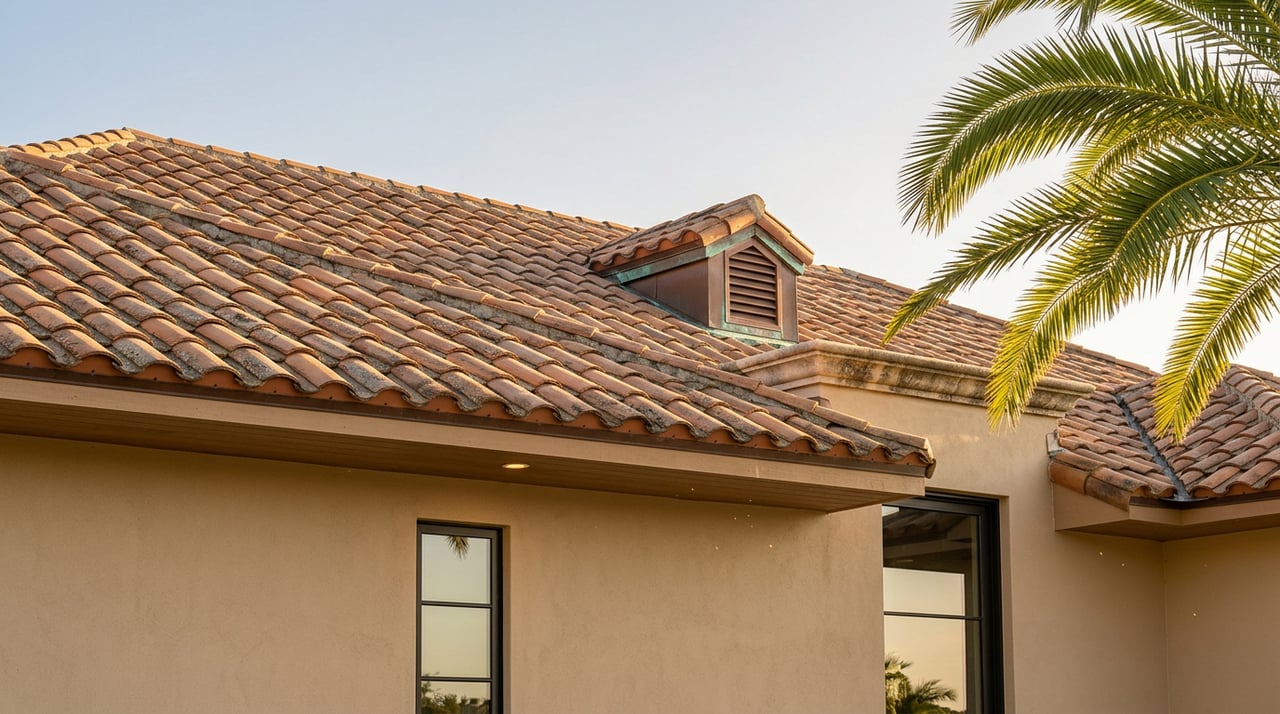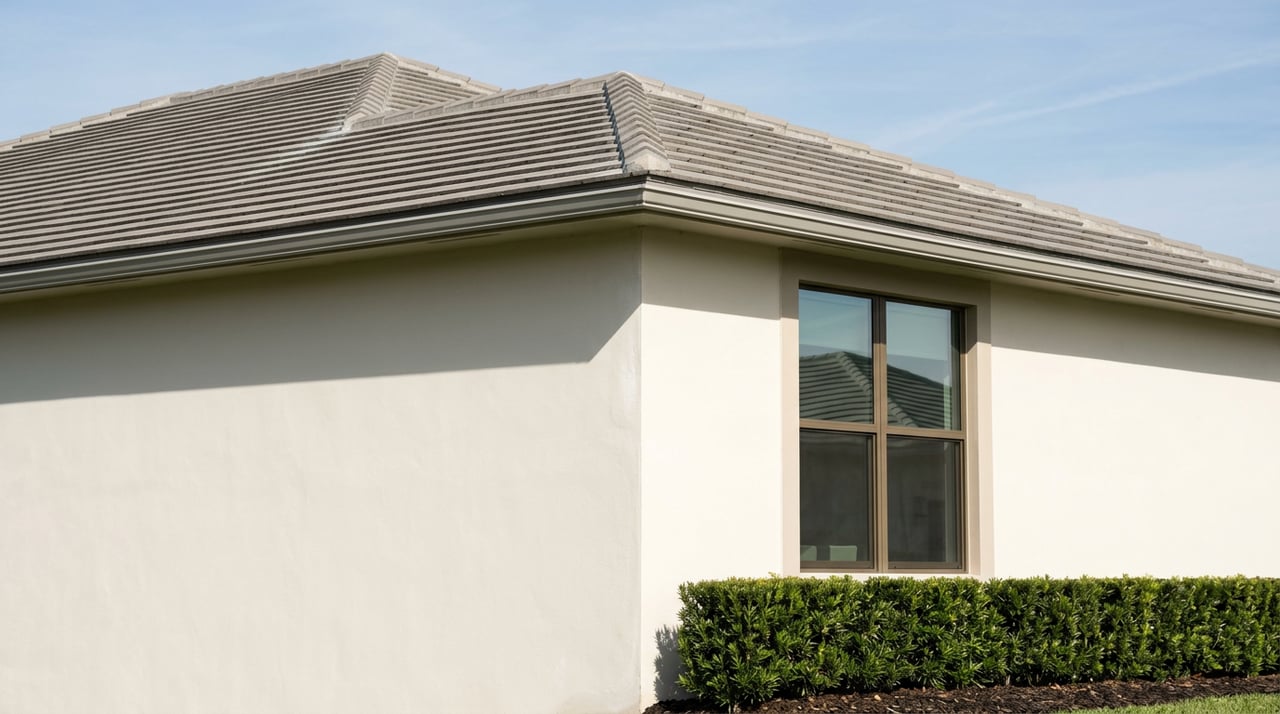
Buyers touring Lotus Palm tend to file the insurance question under "solved." The homes went up starting in 2021, built to a hurricane code that's two decades newer than most of West Boca's housing stock. Hip roofs, impact windows, roof-to-wall connections rated for South Florida wind. On paper, that should mean a lighter premium than the 1980s and 1990s subdivisions a few miles east.
The assumption is reasonable. It's also not how the discount actually shows up on your bill.
Florida law requires every property insurer to reduce the windstorm portion of a premium when a licensed inspector documents specific wind-resistant features on a home. That's not a courtesy carriers extend to newer buildings. It's a mandated credit tied to paperwork. Without that paperwork on file in the form the carrier accepts, a brand-new house can price the same as the 20-year-old house next door, regardless of what's actually holding its roof on.
That gap matters more in Lotus Palm right now than it did two years ago, for a reason specific to where the community is in its own life cycle.
Most Lotus Palm Buyers Today Aren't Buying From the Builder
Lotus Palm sold out its original allotment of roughly 525 homesites. GL Homes has moved on to Lotus Edge next door, running its own lottery-style reservation process for new inventory. Anyone buying in Lotus Palm today is almost certainly buying a resale.
That distinction changes the insurance conversation. A buyer purchasing directly from a builder gets a wind mitigation inspection scheduled as part of the closing process, timed to reflect the home as it stands at handoff. A resale buyer inherits whatever documentation the current owner has on file, filed whenever that owner last dealt with their carrier. For a 2021 or 2022 build, that could be an inspection completed near the original closing, three, four, even five years ago.
That timing is no longer a minor detail.
The Form Changed on April 1, 2026
Florida's Office of Insurance Regulation issued a revised version of the Uniform Mitigation Verification Inspection Form, OIR-B1-1802, effective April 1, 2026. It's the first significant update to the form in over a decade, built around a 2024 wind-loss study that reassessed how much credit different construction features actually earn based on real hurricane performance data.
The revision requires more specific documentation than the old version, product approval numbers, sharper photo evidence, more detail on how a roof deck is fastened and how openings are protected. Carriers are required to accept the prior version, but only if the inspection was completed within the five years before April 1, 2026, and nothing structural has changed on the home since.
For a Lotus Palm resale, that means the seller's existing wind mitigation report might still be valid. It might also be sitting right at the edge of that window, or it might have been done under an even older standard that no longer qualifies for full credit. There's no way to know without asking, and the seller has no obligation to volunteer it.
What's Automatic, and What Someone Still Has to Prove
Being built after Florida's 2002 statewide code takes care of one box on the form. Everything else has to be documented, inspected, and filed correctly before a carrier will apply it.
| Credit | Earned automatically by being new? | What actually has to happen |
|---|---|---|
| Building-code era | Yes, if permitted after March 1, 2002 | Carrier applies the flat credit once it's recorded on a current-form report |
| Roof shape (hip vs. gable) | No | Verified and documented by a licensed inspector |
| Roof-to-wall connection | No | Verified on-site; stronger hardware (clips, wraps) earns a larger credit |
| Opening protection | No | All-or-nothing. One unprotected window or door voids this entire category |
| Whether the report is current | No | Must use the OIR-B1-1802 Rev. 04/26 form, or a pre-4/1/26 report still inside its five-year window with no structural changes |
A Lotus Palm home almost certainly checks every box on the left. Whether the current carrier's quote reflects that comes down entirely to the column on the right.
The Rate Cut Is Real, and So Is the County's Baseline
Florida's insurance market has genuinely turned a corner this year in some respects. Citizens Property Insurance approved an average rate cut of roughly 12 percent for Palm Beach County policyholders in 2026, its first broad relief for the county since 2019, and several private carriers followed with smaller reductions of their own.
That relief is coming off a very high base. Palm Beach County's average homeowners premium still runs around $6,412 a year according to Florida Office of Insurance Regulation data reported this year, the second-highest average of any county in the state behind Monroe. A Yahoo Finance report on the statewide cuts quoted a Palm Beach County commissioner describing the pattern residents are still feeling: relief on paper, but bills that keep climbing in practice for anyone whose documentation isn't optimized.
A Lotus Palm home should land toward the lower end of that county range given its construction. It won't land outside the range entirely just because the home is new. The building code did its part in 2021. The paperwork still has to do its part in 2026.
Before You Waive the Insurance Contingency
If you're under contract on a Lotus Palm resale, this is worth handling before you sign off on financing, not after.
- Ask the seller for the actual wind mitigation report, not a summary or a builder brochure referencing the home's features. You want the filed OIR-B1-1802 itself.
- Check the inspection date against April 1, 2026. If it predates that date, confirm with your insurance agent whether it still falls inside the accepted five-year window and whether anything structural has changed since (a re-roof, new windows, an addition).
- If there's any doubt, order a fresh inspection under the current form. It typically runs $75 to $150 and takes under an hour. Compared to what an unfiled or outdated credit can cost you annually, it's one of the cheapest verifications in the entire closing process.
- Get your quote in hand before you waive the contingency, not after. The lender will require proof of coverage to fund regardless, so there's no advantage to guessing.
None of this changes what the home is. It changes whether your policy reflects what the home is.
Frequently Asked Questions
Does buying new construction in Florida guarantee a lower insurance premium? It gives the home the right features to earn lower-tier credits, but the discount itself depends on a carrier receiving current, properly documented paperwork. A new home with no filed wind mitigation report can quote at the same rate as an older home with none.
If I'm buying a Lotus Palm resale, do I need a new inspection even if the seller has one? Only if the seller's report predates April 1, 2026 and falls outside the five-year acceptance window, or if anything structural has changed since it was completed. Ask your insurance agent to confirm before you rely on it.
Is Palm Beach County's 2026 rate cut going to make Lotus Palm noticeably cheaper to insure? The cut helps at the margin, but it's applied against a county average that remains one of the highest in Florida. The bigger lever for a Lotus Palm buyer is making sure every wind mitigation credit the home actually qualifies for gets documented and filed, not waiting on a statewide rate adjustment to do the work.
Who do I call to confirm a wind mitigation report is still valid? A licensed Florida property insurance agent can review the report's date and form version against current carrier requirements before you close.
If you're weighing a purchase in Lotus Palm, or trying to figure out what a resale there will actually cost to carry, Courtney Farrell can walk through the closing paperwork with you before you're up against a contingency deadline. Reach out to get started.